How Many Days in Italy? 7, 10 and 14-Day Routes for 2026

The short answer
How many days in Italy you need is ten for most first trips: Milan, Venice, Florence and Rome, two or three days each, linked by fast trains. Seven days fits Rome, Florence and Venice only. Fourteen adds Lake Como, Siena or the Dolomites. Fly into Milan and home from Rome, and go in April, May, September or October.
Italy is easy to over-plan. The four cities most people want sit on one high-speed rail line, and the hard part is choosing what to leave out, not getting between them.
This page is the planning guide for the whole country. It sets out three routes, the train times that hold them together, and the rules that apply everywhere: entry, local taxes, fares, holidays and seasons. Each city has its own guide, linked below. Every figure was checked against an official source in October 2026.
Before you book: what applies to the whole trip
- Entry rules. Italy is in the Schengen area. US, UK and Canadian passport holders can visit for up to 90 days in any 180 without a visa, and days spent in other Schengen countries count toward the same 90. Other nationalities should check the visa requirements by country.
- Passport dates. The UK government’s advice says your passport must have been issued less than 10 years before you arrive and must be valid for at least 3 months after you leave the Schengen area.
- Fingerprints at the border. The EU’s Entry/Exit System has been fully running since 10 April 2026, so non-EU visitors give a face scan and fingerprints at their first Schengen border.
- ETIAS is not running yet. The EU expects its EUR 20 travel authorisation to start in the last quarter of 2026, but no start date had been announced at the time of writing. Under-18s and over-70s will pay no fee.
- EU citizens travel on a national ID card or passport and need none of the above.
- A data plan. Check which iPhones support eSIM before you buy one.
- Travel insurance. Strikes and summer storms cancel trains, so read whether travel insurance is worth it.
How many days in Italy do you need?
Ten days is the comfortable answer for a first visit. Seven works for three cities, and anything shorter means picking two.
| Days | Route | Who it suits |
|---|---|---|
| 5-6 | Rome and Florence | A short first look |
| 7 | Rome, Florence, Venice | Most one-week trips |
| 10 | Add Milan | Most first visits |
| 14 | Add Lake Como, Siena or Tivoli | A slower trip |
Count nights, not days. A transatlantic flight usually lands in the morning, and that first day is rarely worth much after a night on a plane.
How long in each city?
Each city guide sets its own answer. Added together they come to more than ten days, which is why a first trip always involves cutting something.
| City | Days in our guide | Main day trips |
|---|---|---|
| Rome | 3 | Tivoli, Ostia Antica, Orvieto |
| Florence | 3 | Siena, Pisa, Lucca |
| Venice | 3, minimum 2 | Padua, Verona |
| Milan | 2-3 | Lake Como, Bergamo |
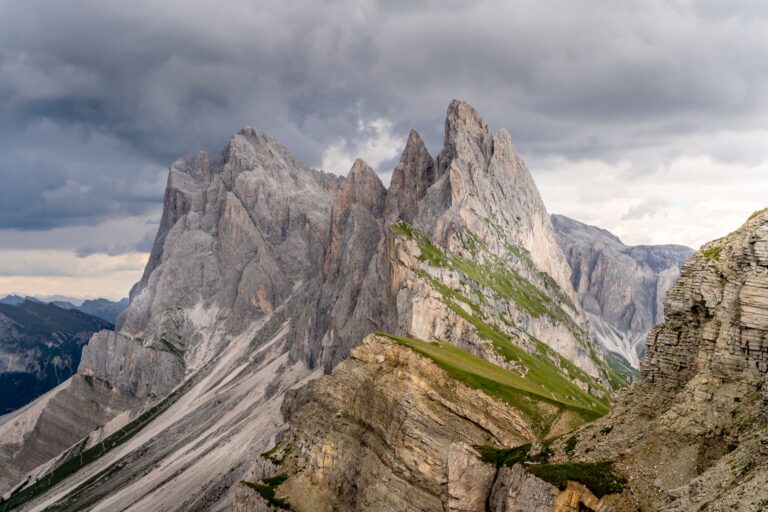
| Dolomites | 4, summer only | Seceda, Tre Cime |
The Dolomites guide plans four days from Ortisei and Cortina between late June and mid-September, when the lifts run. Outside summer, give those days to the cities instead.
Italy itinerary for 7 days
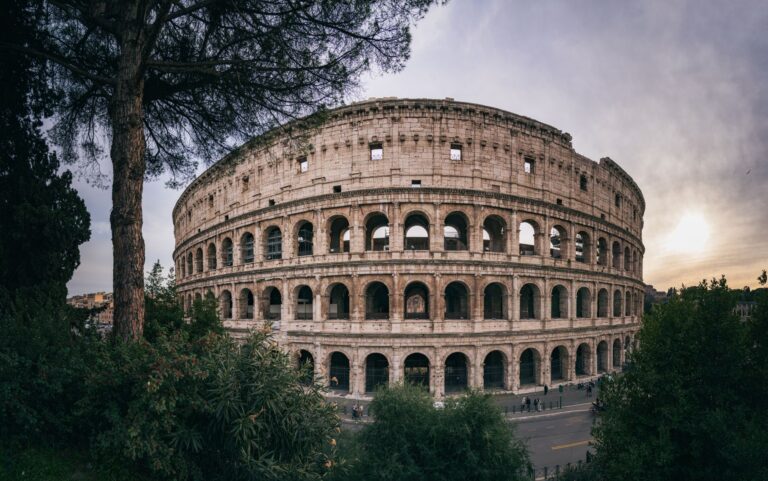
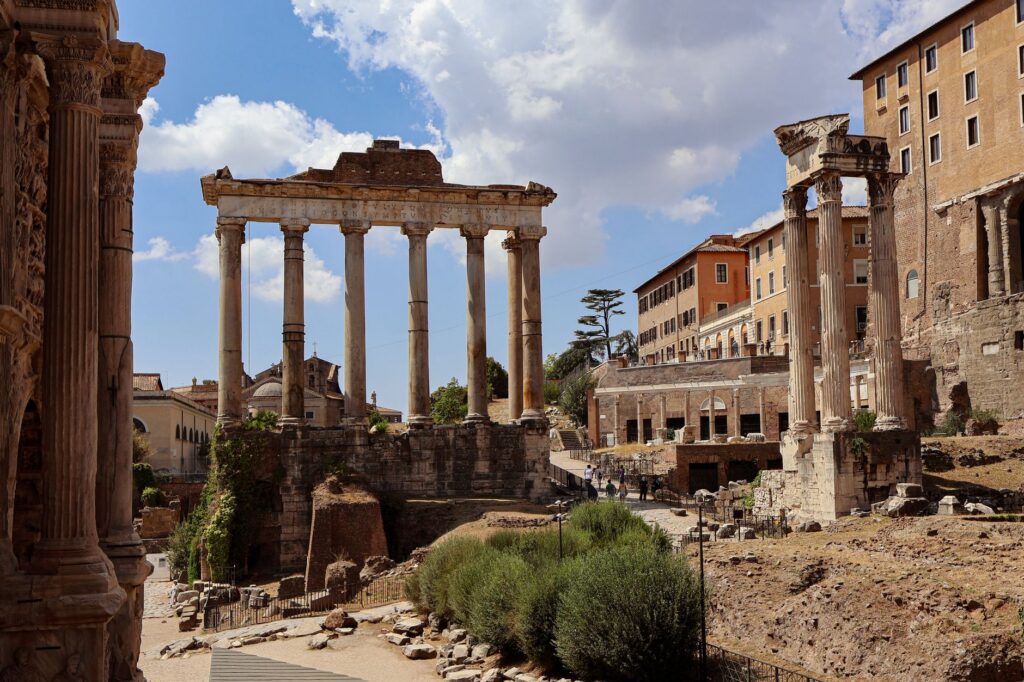
- Days 1-3, Rome. The Colosseum and the Forum, then the Vatican, then the Borghese Gallery and Trastevere.
- Day 4, train to Florence. Just over 1 hour 30 minutes by Frecciarossa, according to Trenitalia. Spend the afternoon at the Duomo.
- Day 5, Florence. The Uffizi in the morning, the Oltrarno in the afternoon.
- Days 6-7, Venice. The Frecciarossa takes from 2 hours 13 minutes. Two nights is the minimum the Venice guide suggests, so arrive early on day six.
Rome has the long-haul flights, so most people start there. Fly home from Venice, or take the train to Milan, 2 hours 27 minutes away, if the flights are cheaper.
Italy itinerary for 10 days
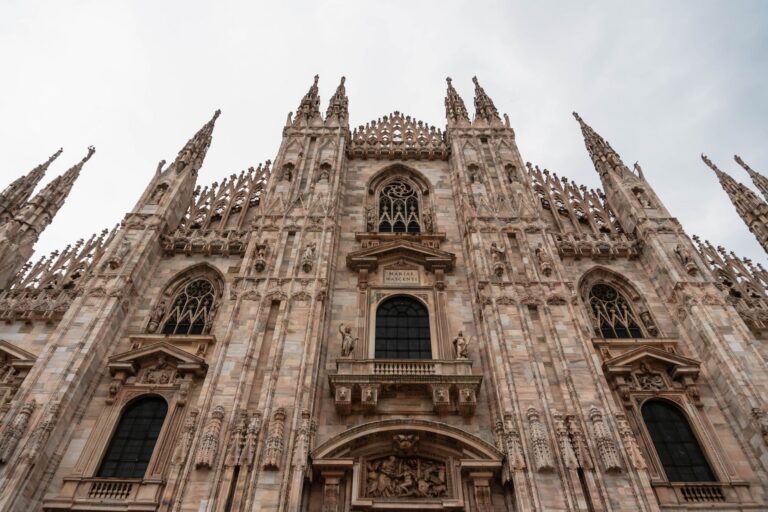
- Days 1-2, Milan. The Duomo and the Last Supper, booked weeks ahead.
- Days 3-4, Venice, 2 hours 27 minutes east of Milan by Frecciarossa.
- Days 5-7, Florence, with one day out to Siena or Pisa.
- Days 8-10, Rome, flying home from Fiumicino.
Running north to south means no day is spent going back. From Fiumicino, the Leonardo Express reaches Rome’s Termini station in 32 minutes for EUR 14.
Italy itinerary for 14 days
- Days 1-3, Milan, with a day at Lake Como. Trains reach Varenna in about 64 minutes.
- Days 4-6, Venice, with Padua or Verona as a half day.
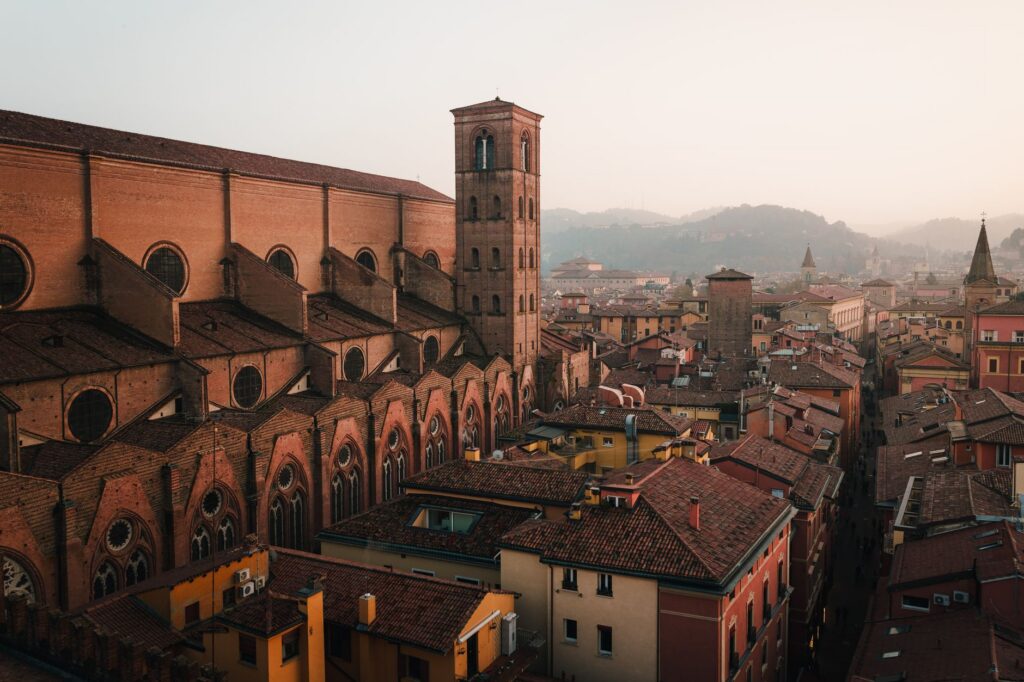
- Day 7, Bologna. It sits on the line south: 1 hour 33 minutes from Venice and 37 minutes from Florence.
- Days 8-10, Florence, with Siena or Lucca.
- Days 11-14, Rome, with Tivoli or Ostia Antica as the fourth day.
In July or August, swap Bologna and a Venice day for the Dolomites. Cortina Express buses run from Mestre to Cortina d’Ampezzo in about 2 hours 30 minutes.
How do you get between Italian cities?
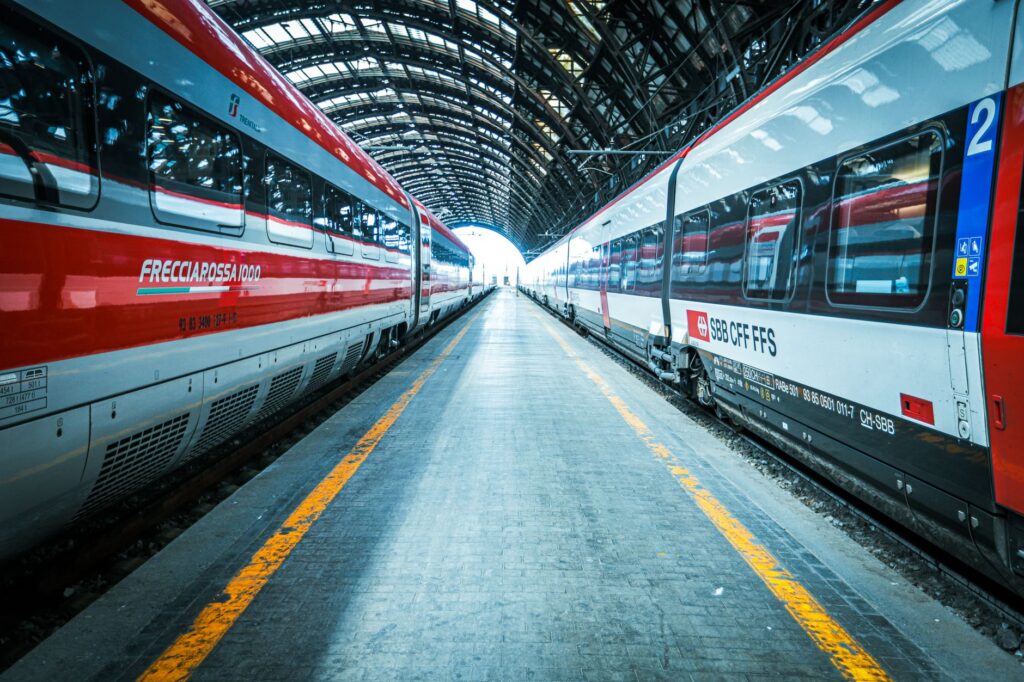
By train. Trenitalia’s Frecciarossa links all four cities, and a second high-speed operator, Italo, runs on the same main lines.
| Leg | Fastest Frecciarossa |
|---|---|
| Milan to Venice | 2 hr 27 min |
| Venice to Florence | 2 hr 13 min |
| Florence to Rome | Just over 1 hr 30 min |
| Milan to Rome, non-stop | 2 hr 50 min |
| Venice to Rome | 3 hr 58 min |
High-speed tickets come in fare types, and Trenitalia’s conditions differ sharply between them.
- Base is the flexible fare. You can change it for the price difference, and refunds are allowed with a deduction.
- Economy is cheaper and fixed: no changes, no refund, no other train.
- Super Economy is the cheapest. Only the departure time can be changed, free; a EUR 3 “tiRimborso” option makes it partly refundable.
The cheaper fares sell out first, so book the long legs once your dates are fixed. Short regional hops, such as Florence to Pisa, can be bought on the day.
Is an Italy rail pass worth it? Usually not on these routes. Eurail and Interrail sell an Italy pass, but its operator says seats on Frecciarossa and InterCity trains must still be reserved, so you pay twice for each long leg.
With three or four long journeys in ten days, a pass has little to spread its price over. Compare it against Economy fares for your actual dates before buying.
What Italy charges in local taxes, and what a day costs
Italy has no national tourist tax. Each city sets its own, per person per night, and your hotel or host collects it.
| Place | Three-star hotel | Cap and exemptions |
|---|---|---|
| Rome | EUR 6 | Up to 10 nights |
| Florence | EUR 6 | 7 nights, under-12s exempt |
| Venice | EUR 3.50 | 5 nights, under-10s exempt |
| Milan | EUR 7 | Under-18s exempt |
| Ortisei | EUR 4 | Under-14s exempt |
Venice also charged day visitors an access fee of EUR 5 or EUR 10 on 60 days in 2026. Overnight guests are exempt but must register. The 2027 dates had not been published at the time of writing.
Each city guide also adds up a sample day for one adult: the main tickets, local transport and one night of tourist tax, before your room and food.
- Rome: EUR 36, for the Colosseum, the Pantheon, the Trevi basin, two metro rides and the hotel tax.
- Milan: EUR 36.60, for the Duomo combo, a 24-hour transport ticket and the city tax.
- Florence: EUR 60, with the Brunelleschi dome pass and the Accademia.
- Venice: EUR 68.50, with the Doge’s Palace, the basilica and a 24-hour vaporetto pass.
- Dolomites: EUR 78, most of it the Seceda cable car return.
When is the best time to visit Italy?
April, May, September and October are the most comfortable months for a city route. NOAA’s 1991-2020 normals put Rome’s average August high at 31.6°C (89°F), and Milan’s January high at 7.3°C (45°F).
| Months | What to expect | Crowds |
|---|---|---|
| Apr to May | Mild, Easter crowds | Busy |
| Jun to Aug | Hot and dry in the cities | Busiest, August peak |
| Sep to Oct | Warm, clear days | Busy into October |
| Nov | Wettest month in Rome and Florence | Lowest |
| Dec to Mar | Cold in the north, mild in Rome | Low outside the holidays |
The north is colder than visitors expect. Venice averages 7.5°C in January on ISPRA’s normals, against 12°C in Rome, so a winter trip runs better from south to north.
What is the cheapest time to visit Italy?
November, then January and February. Italy’s statistics office, ISTAT, counted 17.3 million nights in hotels and rentals in November 2025, the lowest month of the year, against 85.2 million in August.
January had 19.5 million and February 19.9 million. Avoid the weeks around Christmas and New Year, and Easter, which falls on 28 March in 2027. The November figure is provisional, but the gap is too wide to close.
Italy’s holidays to plan around
On national holidays museums keep their own hours, many shops close, and trains fill with Italians travelling home. Since 2026 there is a new one: 4 October, the feast of St Francis, restored by Law 151 of 2025.
| Holiday | Date | Day |
|---|---|---|
| Immaculate Conception | 8 Dec 2026 | Tuesday |
| Epiphany | 6 Jan 2027 | Wednesday |
| Easter Monday | 29 Mar 2027 | Monday |
| Republic Day | 2 Jun 2027 | Wednesday |
| Ferragosto | 15 Aug 2027 | Sunday |
| St Francis | 4 Oct 2027 | Monday |
The others are 1 January, 25 April, 1 May, 1 November and 25 and 26 December. Cities add their own patron saint’s day, such as 24 June in Florence.
What goes wrong on a first Italy trip
- Too many bases. Every hotel change costs half a day. Two nights is a sensible minimum anywhere.
- Booking the Last Supper or the Borghese last. Both sell out weeks ahead; book them before the trains.
- Driving into a ZTL. The US Embassy warns that cameras record cars entering historic centres without a permit, and fines are posted to your home address.
- No permit to drive. Americans who plan to drive should carry an International Driving Permit with their US licence, the embassy says.
- Losing count of Schengen days. A week in France before Italy uses seven of your 90.
If your plan falls apart on the day
- Check the strike calendar. Italy’s Ministry of Infrastructure lists announced transport strikes on its official site.
- Use Trenitalia’s app or ticket office to move a Base ticket to another train before it leaves.
- Swap days when it rains, moving galleries and covered markets to the wet day.
- Call 112, the European emergency number, for police, fire or an ambulance anywhere in Italy.
Frequently asked questions
In short
Ten days is the right length for a first trip to Italy: Milan, Venice, Florence and Rome, north to south by train, flying out of Rome. Seven days covers Rome, Florence and Venice, and fourteen adds the lakes, Bologna or the mountains. Book the long trains and the timed museums early, and go in spring or autumn.
Prices, opening hours and rules change without much notice. Everything here was checked against official sources in October 2026. If something no longer matches what you found on the ground, tell us and we will correct it.
Packing for the flight? Our guide to checked bags on international flights covers the allowance you will be flying with.
Sources
- European Commission: The Entry/Exit System is fully operational from 10 April 2026
- European Union: ETIAS timeline explained and ETIAS will cost EUR 20
- GOV.UK: Italy travel advice, entry requirements
- U.S. Embassy and Consulates in Italy: Transportation and driving in Italy
- Trenitalia: Frecciarossa to Venice, journey times (in Italian) and Rome to Florence (in Italian)
- Trenitalia: Rome to Milan non-stop (in Italian)
- Trenitalia: Fare conditions for Base, Economy and Super Economy and the tiRimborso option (in Italian)
- Interrail: Trains in Italy and reservations
- ISTAT: Tourist flows, first quarter 2025 (PDF, in Italian), third quarter 2025 and fourth quarter 2025
- ISTAT: Tourist flows, second quarter 2025 (PDF, in Italian)
- Gazzetta Ufficiale: Law 151 of 8 October 2025, national holiday of St Francis of Assisi (in Italian)
- Ministry of Infrastructure and Transport: Transport strike calendar (in Italian)
- NOAA: WMO climate normals 1991-2020, via Wikipedia’s Climate of Rome
- City figures, taxes and climate for Milan, Venice, Florence and the Dolomites are sourced in each city guide linked above
- Featured photo: Temple of Saturn in the Roman Forum by C1 Superstar on Pexels
- Train photo by Cristian Manieri on Pexels; Bologna photo by Frank Wesneck on Pexels