How Many Days in Rome? A 3-Day Plan, Costs and Day Trips

The short answer
How many days in Rome you need is three for most first visits: one for the Colosseum, the Forum and the Pantheon, one for the Vatican, and one for the Borghese Gallery and Trastevere. Two days means skipping a whole district. A fourth day adds Tivoli or Ostia Antica. Go in April, May, September or October.
Rome is often given two days at the start or end of an Italy trip. That is enough to queue for the Colosseum and the Vatican, but little else. The city rewards a slower pace, because its best streets sit between the famous sights.
This guide sets out a three-day plan, the 2026 ticket and transport prices, and Rome’s hotel tax. It also covers where to stay, the best months to go and the day trips worth an extra night. Every price was checked against the museum’s, the transport operator’s or the city’s own site in October 2026.
Before you book: what to sort out first
- Entry rules. Italy is in the Schengen area, so US, UK and Canadian passport holders can visit for up to 90 days in any 180 without a visa. The EU’s Entry/Exit System now records fingerprints at the first border, and ETIAS is due in late 2026. Other nationalities should check the visa requirements by country. For the whole country, including routes that combine several cities, see how many days in Italy.
- Timed tickets. The Colosseum and the Borghese Gallery both need a booked time slot, and the Borghese sells no tickets at the door. Colosseum slots open 30 days ahead.
- The Vatican calendar. The Vatican Museums close on Sundays, except the last Sunday of the month, when entry is free and the queue is long.
- A data plan. You will lean on maps between sights; check which iPhones support eSIM before you buy one.
- Travel insurance. See whether travel insurance is worth it for a trip to Europe.
- Your route in. From Fiumicino airport, the Leonardo Express runs non-stop to Termini in 32 minutes for EUR 14, every 15 minutes at busy times.
How many days in Rome do you need?
Three full days is the comfortable answer. Two days covers ancient Rome and the Vatican, but the historic centre gets an evening at best.
| Days | What you see | Who it suits |
|---|---|---|
| 1 | Colosseum, Forum, Pantheon | A stop on a rail trip |
| 2 | Add the Vatican | A short city break |
| 3 | Add Borghese, Trastevere | Most first visits |
| 4-5 | Add Tivoli, Ostia, Orvieto | A slower Lazio base |
One day is possible if you book the Colosseum for 8:30 and walk the rest. You will see the outside of most things, and the Vatican will have to wait for another trip.
A day-by-day Rome itinerary
Each day keeps to one part of the city, so you walk between sights and use the metro only to get there.
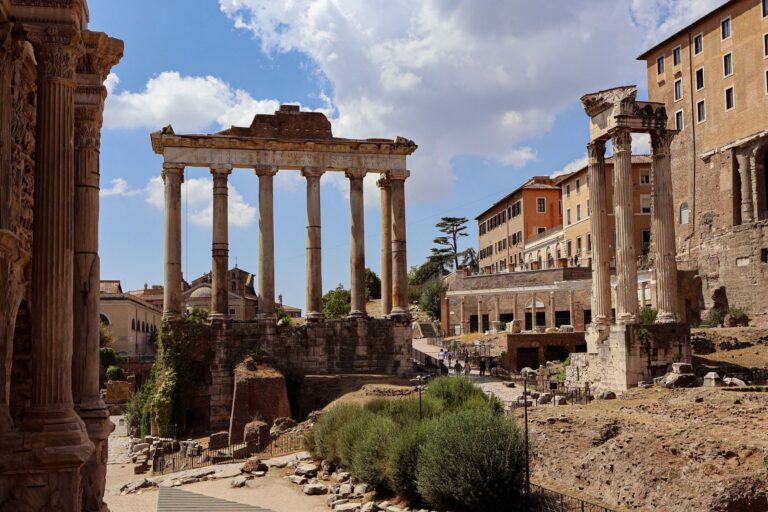
Day 1: Ancient Rome and the Pantheon
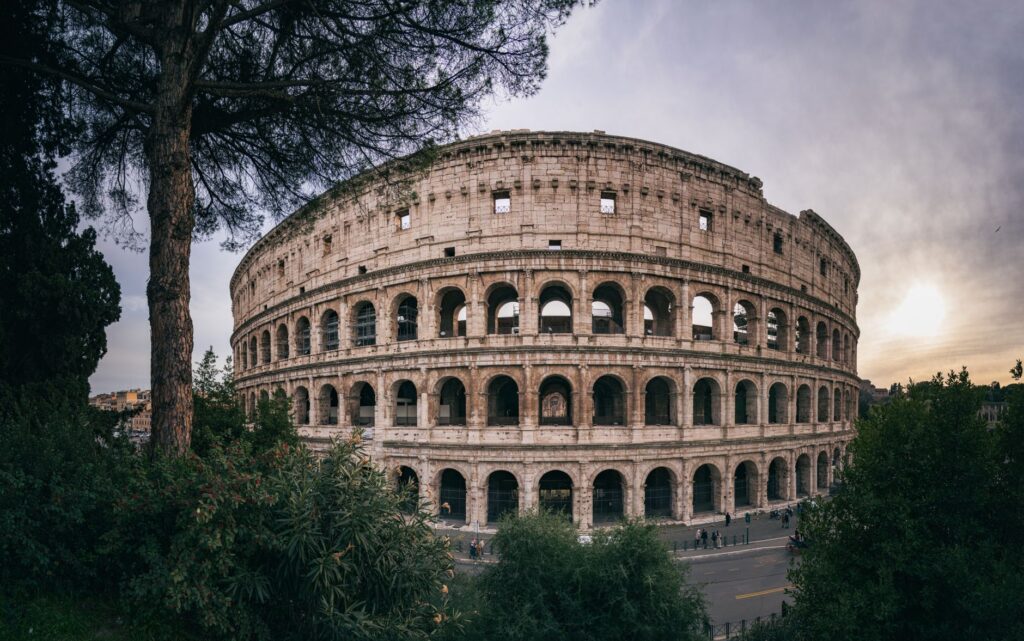
- Enter the Colosseum at 8:30, when it opens, on a ticket booked for the first slot.
- Walk through the Roman Forum and up the Palatine Hill; the same ticket covers both within 24 hours.
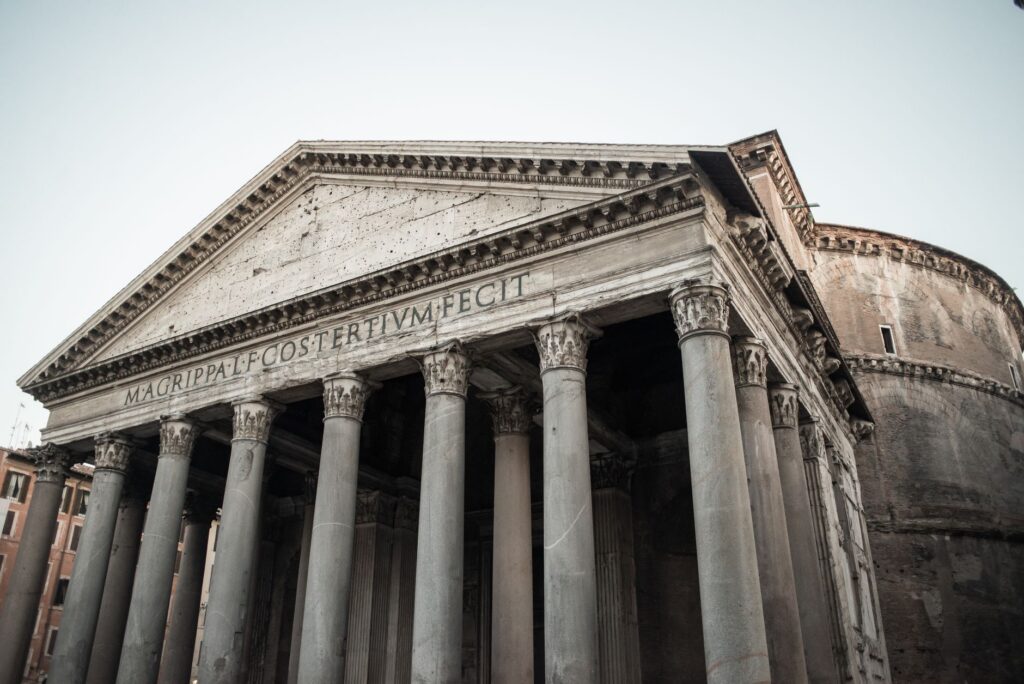
- Cross Piazza Venezia to the Pantheon in the afternoon, then end at the Trevi Fountain.
Day 2: The Vatican
- Take metro line A to Ottaviano and enter the Vatican Museums early; the Sistine Chapel is at the end of the route.
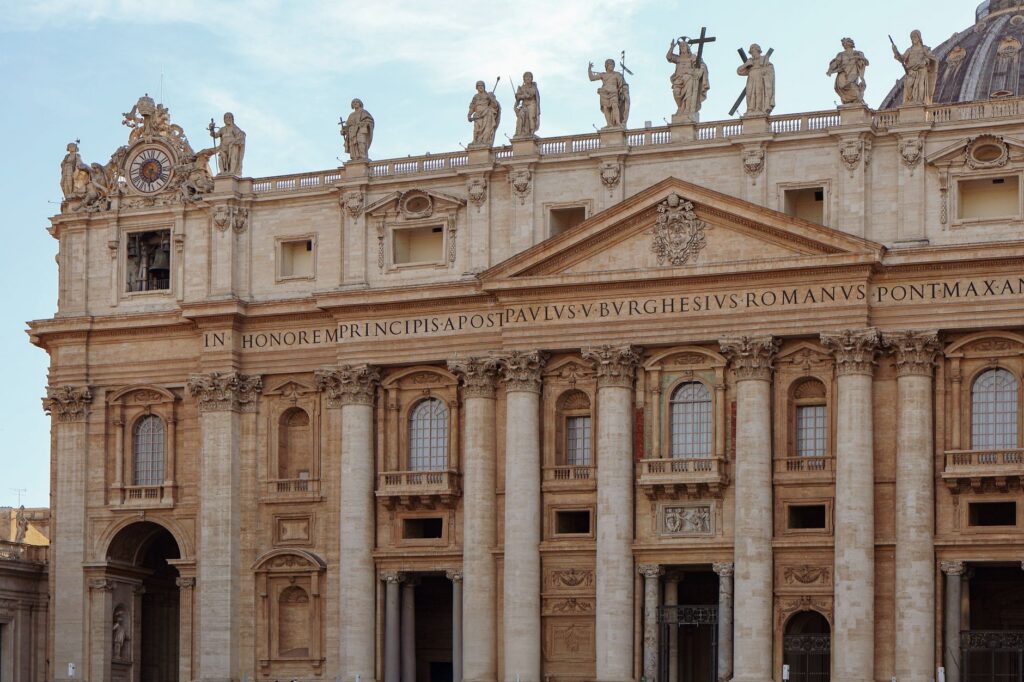
- Walk round to St Peter’s Basilica, which is free and open from 7:00 to 20:00.
- Climb the dome, then walk along the river past Castel Sant’Angelo to Piazza Navona.
Day 3: Villa Borghese and Trastevere
- Book the Borghese Gallery for its 9:00 slot; each visit lasts two hours.
- Walk down through the Villa Borghese gardens to the Spanish Steps and Via del Corso.
- Cross the Tiber to Trastevere for the late afternoon and dinner.
Things to do in Rome, and what they cost in 2026
Rome’s main sights now charge more than they did two years ago. The Pantheon went from EUR 5 to EUR 7 on 1 July 2026, and the Trevi Fountain basin has needed a ticket since February.
| Ticket | Adult price, 2026 |
|---|---|
| Colosseum, Forum, Palatine, 24h | EUR 18 |
| Full Experience Arena, 2 days | EUR 24 |
| Vatican Museums, booked online | EUR 25 |
| Vatican Museums, at the door | EUR 20 |
| Borghese Gallery, with booking | EUR 18 |
| Pantheon | EUR 7 |
| Trevi Fountain basin | EUR 2 |
The Vatican’s EUR 25 is the EUR 20 ticket plus a EUR 5 booking fee, which buys you out of the ticket queue. The Borghese adds a compulsory EUR 2 reservation to its EUR 16 ticket, and opens Tuesday to Sunday from 9:00 to 19:00.
Note: St Peter’s Basilica is free. Its dome has a separate charge, with a lift option that saves the first part of the climb.
How much does a day in Rome cost?
The first day of the plan for one adult comes to about EUR 36 before your room and food. The figure below assumes a three-star hotel and two single metro rides.
| Item | Adult price, 2026 |
|---|---|
| Colosseum, Forum and Palatine | EUR 18 |
| Pantheon | EUR 7 |
| Trevi Fountain basin | EUR 2 |
| Two 100-minute BIT tickets | EUR 3 |
| Hotel tax, three-star hotel | EUR 6 |
A BIT ticket costs EUR 1.50 and lasts 100 minutes on buses, trams and the metro, with one metro ride. Passes cost EUR 8.50 for 24 hours, EUR 15 for 48 and EUR 22 for 72, at prices ATAC set on 1 July 2025.
Most of the centre is walkable, so a pass only pays off on days with four or more rides.
The Trevi Fountain ticket and Rome’s hotel tax
Rome now charges visitors in two ways that catch people out.
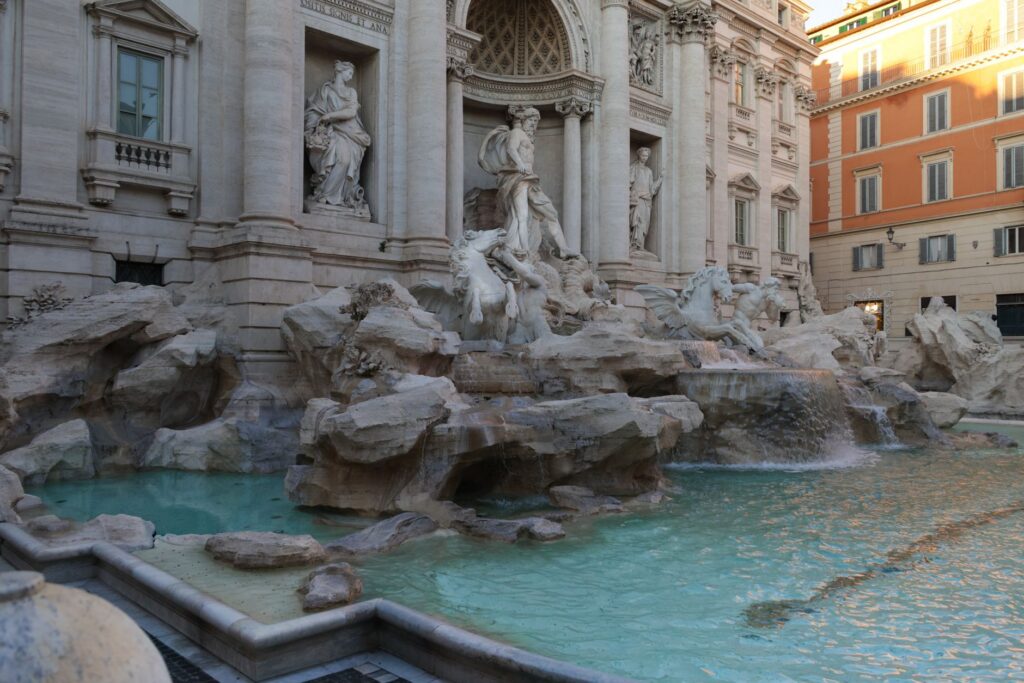
- The Trevi Fountain ticket costs EUR 2 to enter the area beside the basin, every day from 9:00 to 22:00. You can still see the fountain free from the square at any hour. Pay online, at tourist infopoints, or by card at the entrance.
- The hotel tax is charged per person per night, for up to 10 nights. It is EUR 4 at one and two stars, EUR 6 at three, EUR 7.50 at four and EUR 10 at five, with B&Bs and short-term rentals at EUR 6.
- Who is exempt from the Trevi fee. Residents of Rome, children under 5, and disabled visitors with a carer enter free.
Where to stay in Rome
Five areas suit most visits. Pick by the metro line and the evenings you want, since the main sights are spread over several kilometres.
| Area | Best for | Trade-off |
|---|---|---|
| Centro Storico | Pantheon, Navona on foot | No metro, highest prices |
| Monti | Colosseum, Cavour metro | Small, books up early |
| Trastevere | Evenings, restaurants | No metro, tram 8 |
| Prati | Vatican, Ottaviano metro | Quiet at night |
| Termini | Airport train, metro A and B | Busy streets at night |
Monti is the practical choice for a first visit, since it sits between the Colosseum and Termini on metro line B. Trastevere suits a second trip, when evenings matter more than transport.
This guide gives no hotel prices, because rates move daily with demand and we found no official, dated source to cite.
Is it worth visiting Rome?
Yes, and for more than the Colosseum. Few cities let you walk from a 2,000-year-old temple to a Baroque fountain in ten minutes, and the Pantheon still has its original concrete dome.
The cost is crowds and queues. From late morning the Vatican and the Trevi Fountain are packed. Book the big tickets for the first slot of the day, and keep the afternoons for neighbourhoods.
When is the best time to visit Rome?
April, May, September and October are the most comfortable months. NOAA’s 1991-2020 normals for Rome Ciampino put the average July high at 31°C (88°F) and the January high at 12°C (54°F).
| Months | Average high | What to expect |
|---|---|---|
| Apr to May | 19-22°C | Mild, busy, Easter crowds |
| Jun to Aug | 28-32°C | Hot, driest months |
| Sep to Oct | 22-27°C | Warm, busy into October |
| Nov | 17°C | Wettest month |
| Dec to Feb | 12-13°C | Mild, quietest outside holidays |
Summer is dry, with about 20 mm of rain in July, while November brings about 108 mm. In August some local restaurants close for the summer holidays, and the heat makes long days at the Forum hard work.
What is the cheapest time to visit Rome?
November to February is usually the cheapest, apart from Christmas and New Year. Demand is lowest then, and timed tickets are easier to book at short notice.
- Use the free Sundays. The Colosseum and the Pantheon are free on the first Sunday of the month, and the Vatican Museums on the last.
- Check the closing times. From 25 October 2026 the Colosseum’s last entry is 15:30, so winter days need an early start.
- Avoid Easter week. Spring is the most popular season, and Holy Week fills the Vatican and the hotels.
Day trips from Rome worth an extra day
Rome sits at the centre of Italy’s rail network, so a fourth or fifth day opens several towns without a car.
| Day trip | From Rome | What it is |
|---|---|---|
| Ostia Antica | About 37 min, train | Rome’s ancient port |
| Tivoli | About 1 hr, train | Villa d’Este gardens |
| Orvieto | About 1 hr 10 min, train | Hill town, cathedral |
| Naples | Just over 1 hr, Frecciarossa | Pizza, Pompeii beyond |
| Florence | Just over 1 hr 30 min | Renaissance city |
Ostia Antica is the easiest trip, on the Roma-Lido line from Porta San Paolo, next to Piramide metro. Its EUR 18 ticket covers every site in the park for eight days.
Tivoli trains leave from Tiburtina station, and Villa d’Este costs EUR 15, and a 72-hour pass adds Hadrian’s Villa for EUR 30.
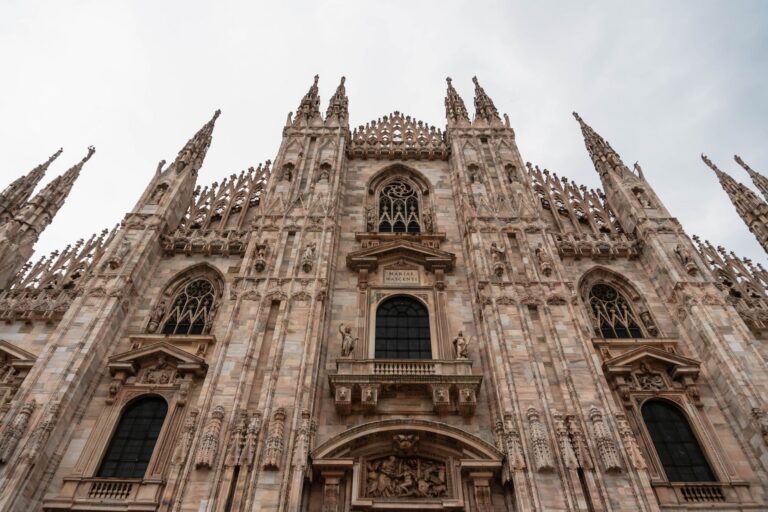
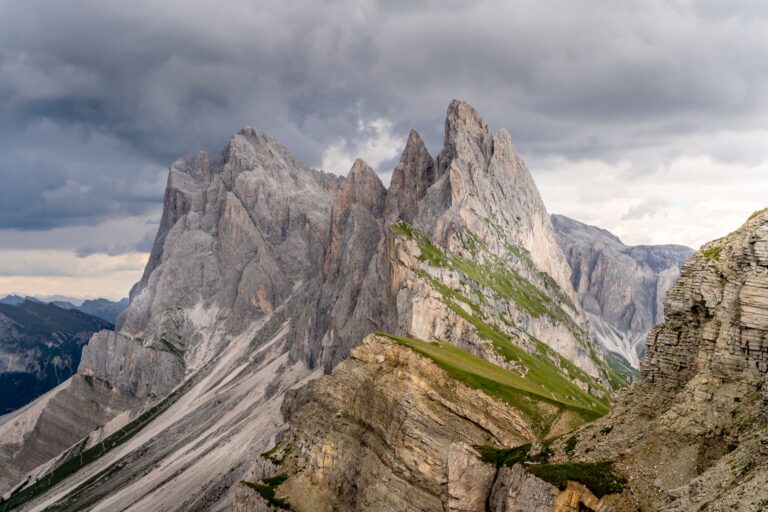
Florence works as a day trip but deserves more; our guide to how many days in Florence suggests three. The same high-speed line runs on to the city in how many days in Venice. From Venice, buses run north to the mountains in how many days in the Dolomites. Milan is 2 hours 50 minutes north by Frecciarossa, covered in how many days in Milan.
What goes wrong on a Rome trip
- Arriving at the Borghese without a booking. There are no walk-in tickets, even on free days; book on the gallery’s own site.
- Planning the Vatican for a Sunday. The museums are closed on most Sundays, and the free last Sunday closes at 14:00.
- Unofficial ticket sites. Resellers charge well above the official price; buy from ticketing.colosseo.it, museivaticani.va and the Borghese’s own site.
- Shorts at St Peter’s. The basilica’s dress code requires covered shoulders, and long trousers or a skirt below the knee, for the dome too.
If your plan falls apart on the day
- Swap the days if the Colosseum is sold out, moving the Vatican or Borghese forward and checking again that evening.
- Use the free basilica if the Vatican Museums are full, since St Peter’s needs no ticket at all.
- Ride metro line A or B when your feet give out, since both cross the centre near the main sights.
- Ask a tourist infopoint at Termini or Fiumicino, or check the museum’s own site for closures.
Frequently asked questions
In short
Three full days in Rome covers ancient Rome, the Vatican and the Borghese with Trastevere, two is a rush, and a fourth adds Tivoli or Ostia Antica. Stay in Monti for the metro or the Centro Storico for walking, book the Colosseum and the Borghese ahead, and go in spring or early autumn.
Prices, opening hours and rules change without much notice. Everything here was checked against official sites in October 2026. If something no longer matches what you found on the ground, tell us and we will correct it.
Planning the flight? Our guides to checked bags on international flights and the carry-on luggage checklist cover what to pack, and how many days in Japan uses the same approach for a longer trip.
Sources
- European Commission: The Entry/Exit System became fully operational on 10 April 2026
- European Union: ETIAS, travel authorisation for visa-exempt visitors
- Parco archeologico del Colosseo: Opening hours and tickets (in Italian), 24h ticket and Full Experience Arena
- Musei Vaticani: Prices and tickets and opening days and hours (in Italian)
- Basilica di San Pietro: Opening hours, new basilica hours and dress code
- Galleria Borghese: Tickets information
- Ministero della Cultura: New Pantheon agreement with the Diocese of Rome (in Italian)
- ANSA: Pantheon ticket rises from 5 to 7 euros (in Italian)
- Pantheon: Official visit and free first Sunday (in Italian)
- Turismo Roma: Trevi Fountain, new entry fee
- Roma Capitale: Hotel tax rates from 1 October 2023 (PDF, in Italian)
- Roma Capitale: Hotel tax regulation, resolution 34/2024 (PDF, in Italian)
- ATAC: New tourist ticket prices from 1 July 2025 (in Italian)
- Trenitalia: Leonardo Express and timetable (PDF)
- Trenitalia: Frecciarossa Rome to Florence (in Italian)
- CoopCulture: Ostia Antica archaeological area ticket
- Villa Adriana e Villa d’Este: Opening time and tickets
- NOAA: WMO climate normals 1991-2020, via Wikipedia’s Climate of Rome
- Featured photo: Görkem Özdemir on Pexels. Inline photos: ArtHouse Studio, C1 Superstar and Magda Ehlers on Pexels.