How Many Days in Japan? 7, 10 and 14-Day Routes for 2026

The short answer
How many days in Japan you need depends on how far west you go: ten days is the sweet spot for a first trip, covering Tokyo, Kyoto, Hiroshima and Osaka. Seven days fits Tokyo, Kyoto and Osaka only. Fourteen adds Okinawa or a slower pace. Fly into Tokyo and out of Osaka, and go in spring or autumn.
Japan rewards a plan that moves in one direction. The main sights sit along a single shinkansen line from Tokyo to Hiroshima, and every backtrack costs half a day and a fare.
This page is the planning guide for the whole country. It sets out three routes, works out whether the Japan Rail Pass pays for itself, and gathers the rules that apply everywhere: entry, taxes, holidays and seasons. Each city then has its own guide, linked below. Every price was checked against an official source in October 2026.
Before you book: what applies to the whole trip
- Entry rules. US, UK and all EU passport holders can visit Japan without a visa for up to 90 days, according to the Ministry of Foreign Affairs list as of October 2026. Other nationalities should check the visa requirements by country.
- Longer stays. UK, Irish, German, Austrian, Swiss, Liechtenstein and Mexican nationals may apply to extend to six months, but only at a regional immigration bureau before the 90 days run out.
- Visit Japan Web. The Digital Agency’s site lets you register immigration and customs details in advance and show a QR code on arrival. It is optional; paper forms are still accepted.
- No travel authorisation yet. Japan’s parliament passed the law creating JESTA, an ESTA-style pre-travel approval, on 29 May 2026. It is not running, and the government aims to launch it in fiscal 2028.
- A data plan. Check which iPhones support eSIM before you buy one.
- Travel insurance. Typhoons cancel trains and flights each summer, so read whether travel insurance is worth it.
How many days in Japan do you need?
Ten days is the comfortable answer for a first visit. Seven works if you keep to Tokyo, Kyoto and Osaka, and fewer than that means choosing between Tokyo and Kyoto.
| Days | Route | Who it suits |
|---|---|---|
| 5-6 | Tokyo and Kyoto | A short first look |
| 7 | Tokyo, Kyoto, Osaka | Most one-week trips |
| 10 | Add Hiroshima and Miyajima | Most first visits |
| 14 | Add Okinawa or day trips | A slower trip |
Count nights, not days. Your arrival day is rarely useful after a long-haul flight, so a “seven-day” trip with a late arrival is really six.
How many days in Tokyo, Kyoto and Osaka?
Each city guide sets its own answer. Together they add up to more than a week, which is why seven days feels tight.
| City | Days in our guide | Main day trips |
|---|---|---|
| Tokyo | 4, minimum 3 | Kamakura, Hakone, Nikko |
| Kyoto | 3 | Nara, Uji, Himeji |
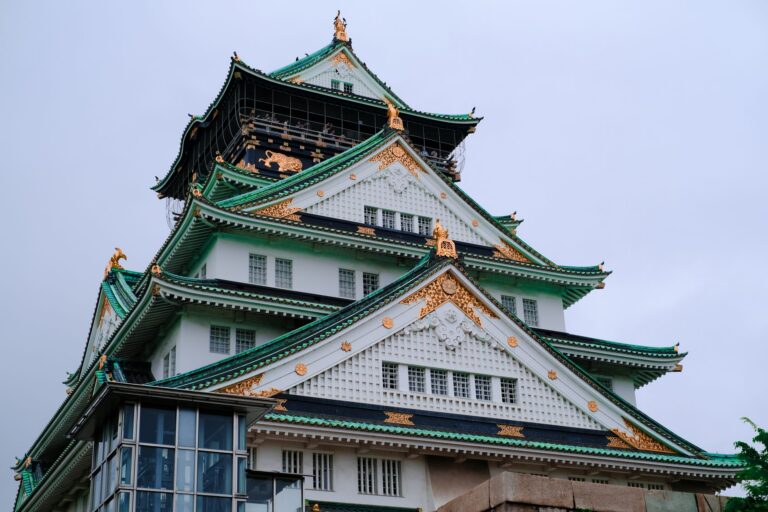
| Osaka | 3, minimum 2 | Nara, Kobe, Himeji |
| Hiroshima | 2 | Miyajima, Iwakuni |
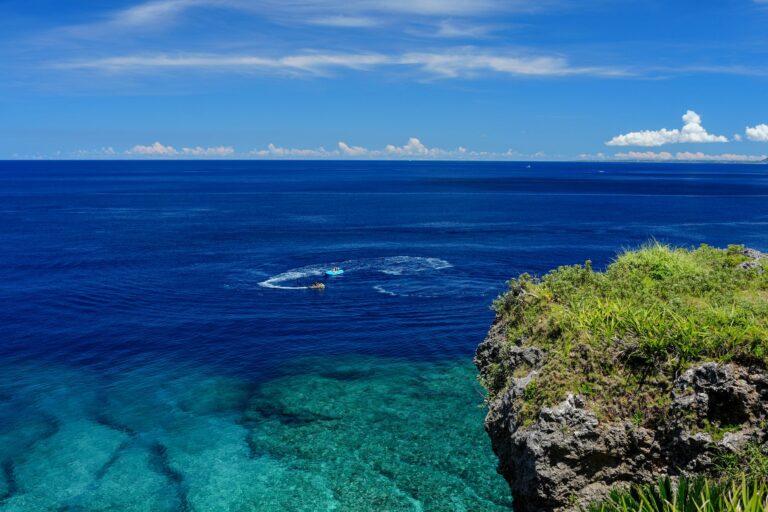
| Okinawa | 4 | Kerama islands |
Kyoto and Osaka sit about 30 minutes apart by JR Special Rapid, so many visitors sleep in one and visit the other. If you base yourself in Kyoto, one night in Osaka is enough for its food streets and castle.
Japan itinerary for 7 days
- Days 1-3, Tokyo. Asakusa and Ueno, then Shibuya and Harajuku, then Shinjuku. Three nights.
- Day 4, shinkansen to Kyoto. About 2 hours 15 minutes on a Nozomi. Spend the afternoon in Higashiyama.
- Days 5-6, Kyoto and Nara. Arashiyama and Kinkaku-ji on one day, Nara’s deer park and Todai-ji on the other.
- Day 7, Osaka. Move to Namba for the evening, then fly home from Kansai Airport.
Flying into Tokyo and out of Kansai saves a ride of over two hours back to Tokyo. Search it as a multi-city fare and compare it with a return before you book.
A 10-day route with Hiroshima
- Days 1-4, Tokyo, with one day trip to Kamakura or Hakone.
- Days 5-7, Kyoto, including Nara.
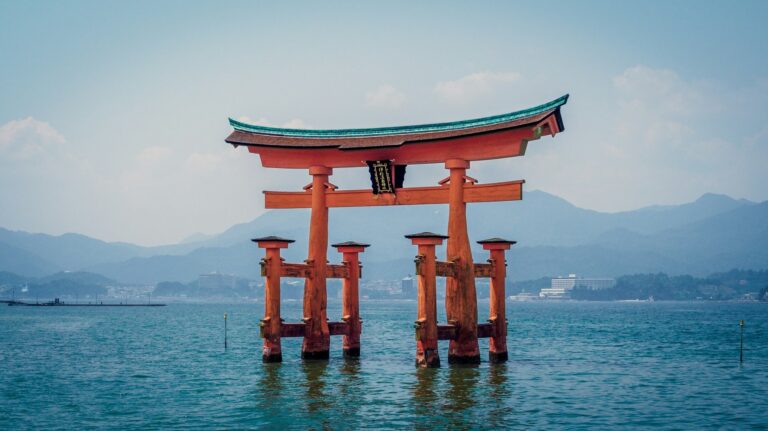
- Days 8-9, Hiroshima, one day for the Peace Memorial Park and one for Miyajima.
- Day 10, Osaka, for the evening and the flight home.
Hiroshima is about 1 hour 40 minutes west of Kyoto by Nozomi. Going there last and doubling back to Osaka costs about an hour, less than a separate trip later.
Japan itinerary for 14 days
- Days 1-4, Tokyo, with Hakone or Nikko as the day trip.
- Days 5-7, Kyoto, with Nara and Uji.
- Days 8-9, Hiroshima and Miyajima.
- Days 10-11, Osaka, with Himeji Castle as a half day.
- Days 12-14, Okinawa, by domestic flight from Osaka, flying home via Naha or back through Kansai.
Three days in Okinawa means picking the north or a Kerama island, not both. If beaches are not the point, give those days to Tokyo and Kyoto instead.
Is the Japan Rail Pass worth it?
Usually not for these routes. The 7-day ordinary pass costs ¥50,000 bought online, or ¥53,000 through an overseas travel agency, since its October 2023 price rise.
| Leg, Nozomi reserved seat | Single ticket |
|---|---|
| Tokyo to Kyoto | ¥13,970 |
| Kyoto to Hiroshima | ¥11,740 |
| Hiroshima to Shin-Osaka | ¥10,750 |
| Shin-Osaka to Tokyo | ¥14,520 |
These are JR Central’s smartEX online prices for the regular season, about ¥200 below the station price. The 10-day route above comes to ¥36,460, well under the pass. Only a full loop back to Tokyo reaches about ¥51,000.
The pass also excludes the fastest trains. To ride a Nozomi you buy an extra ticket, ¥4,960 from Tokyo to Kyoto and ¥6,500 to Hiroshima. Slower Hikari trains are included.
What Japan charges you in taxes, and what it refunds
- Departure tax. The International Tourist Tax rose from ¥1,000 to ¥3,000 per departure on 1 July 2026, according to the National Tax Agency. Airlines usually add it to the fare.
- Hotel taxes. Tokyo, Kyoto, Osaka and Hiroshima Prefecture charge per person per night, each set differently; the city guides give the bands. Okinawa starts a 2% tax, capped at ¥2,000, on 1 February 2027.
- Tokyo’s change. From 1 April 2027 Tokyo’s flat ¥100 to ¥200 becomes 3% of the room rate over ¥13,000.
Note: Kyoto’s top band is ¥10,000 per person per night since March 2026, for rooms at ¥100,000 or more. Check whether your booking price already includes it.
Tax-free shopping changes on 1 November 2026. Japan moves to a refund system. You pay the full price, including consumption tax, and claim the tax back when you leave, according to the Japan National Tourism Organization.
- Spend at least ¥5,000 before tax in one shop on one day and show your passport.
- Keep the goods unused; anything consumed in Japan does not qualify.
- Before check-in at the airport, scan your passport at a tax-free kiosk in the departure lobby.
- Leave within 90 days of the purchase, up from 30.
When is the best time to visit Japan?
Late March to early April and October to November are the most comfortable. Japan Meteorological Agency averages for 1991 to 2020 put Tokyo’s August high at 31.3°C (88°F) and January’s at 9.8°C (50°F).
| Months | What to expect | Crowds |
|---|---|---|
| Late Mar to early Apr | Cherry blossom | The busiest season |
| May | Mild, after Golden Week | Moderate |
| Jun to mid-Jul | Rainy season on Honshu | Lower |
| Jul to Sep | Hot, typhoon months | Summer holidays |
| Oct to early Dec | Clear days, autumn colour | Busy late Nov |
| Jan to Feb | Cold, dry, snow in the north | Lowest |
The agency’s sample cherry trees flower on 24 March on average in Tokyo, 25 March in Hiroshima, 26 March in Kyoto and 27 March in Osaka. Autumn colour arrives late in the cities: the Japan Weather Association expected Tokyo’s 2026 peak around 28 November.
What is the cheapest time to visit Japan?
June, and January to February outside the New Year week. June had the fewest overseas arrivals of the first half of 2026, 3,148,600 against 3,692,200 in April, according to JNTO’s preliminary figures.
The rainy season keeps some visitors away, and no national holiday falls in June. Plan museums, covered markets and day trips you can swap, so a wet day costs you little.
Japan’s holiday weeks to plan around
Domestic travel peaks around Japanese public holidays, and trains and hotels fill first. These are the Cabinet Office dates.
| Period | Dates | Why it matters |
|---|---|---|
| Autumn 2026 | 12 Oct, 3 Nov, 23 Nov | Long weekends |
| New Year | 1 Jan 2027 | Travel home both ways |
| Golden Week | 29 Apr, 3-5 May 2027 | The busiest week |
| Obon | Mid-August; Mountain Day 11 Aug | Family travel peak |
| Silver Week | 20 and 23 Sep 2027 | Short, busy weekend |
What goes wrong on a first Japan trip
- Too many bases. Changing hotel every night loses a morning each time. Two nights is a sensible minimum anywhere.
- Buying the rail pass by reflex. On a one-way route it often costs more than single tickets.
- Ignoring the holiday calendar. Golden Week and Obon fill shinkansen seats days ahead.
- Unreserved luggage. Bags with total dimensions over 160 cm need a reserved oversized-baggage seat on the Tokaido, Sanyo and Kyushu Shinkansen.
- Leaving tax-free claims to the gate. From November 2026 the kiosk comes before check-in, not after security.
If your plan falls apart on the day
- Swap days when rain or a typhoon warning hits, moving museums and markets to the wet day.
- Check JR’s operation pages before heading to the station; delays are posted per line.
- Ask a JR ticket office about changing a reserved seat before the train leaves, rather than boarding without one.
- Contact the Japan Visitor Hotline run by JNTO, on 050-3816-2787 (+81-50-3816-2787 from abroad), which answers in English 24 hours a day.
Frequently asked questions
In short
Ten days is the right length for a first trip to Japan: Tokyo, Kyoto, Hiroshima and Osaka in one direction, flying out of Kansai. Seven days covers Tokyo, Kyoto and Osaka, and fourteen adds Okinawa. Single shinkansen tickets usually beat the rail pass on these routes.
Prices, opening hours and rules change without much notice. Everything here was checked against official sources in October 2026. If something no longer matches what you found on the ground, tell us and we will correct it.
Packing for the flight? Our guide to checked bags on international flights covers the allowance you will be flying with.
Sources
- Ministry of Foreign Affairs of Japan: Exemption of Visa (Short-Term Stay)
- Immigration Services Agency: 2026 amendments to the Immigration Control Act, including JESTA (in Japanese)
- Digital Agency: Visit Japan Web, how to use
- Japan Customs: Declaration of accompanied articles
- National Tax Agency: International Tourist Tax and the Japan Tourism Agency’s rate notice
- Japan National Tourism Organization: Japan’s new tax-free shopping system
- Japan Rail Pass: Prices and Nozomi and Mizuho ticket
- JR Central smartEX: Reserved-seat price list (in Japanese)
- JR Central: Oversized baggage on the Tokaido Shinkansen
- Cabinet Office: National holidays, 2026 and 2027 (in Japanese)
- JNTO: Visitor arrivals, June 2026, April 2026 and February 2026
- JNTO: Japan Visitor Hotline
- Japan Meteorological Agency: Tokyo climate normals, 1991-2020
- Japan Meteorological Agency: Cherry blossom flowering dates
- Japan Meteorological Agency: Rainy season normals
- Japan Weather Association: 2026 autumn colour forecast
- Tokyo Metropolitan Government Bureau of Taxation: Accommodation tax
- Kyoto City: Accommodation tax from 1 March 2026
- Osaka Prefectural Government: Accommodation tax (in Japanese)
- Hiroshima Prefectural Government: Accommodation tax (in Japanese)
- Okinawa Prefectural Government: Accommodation tax from 1 February 2027
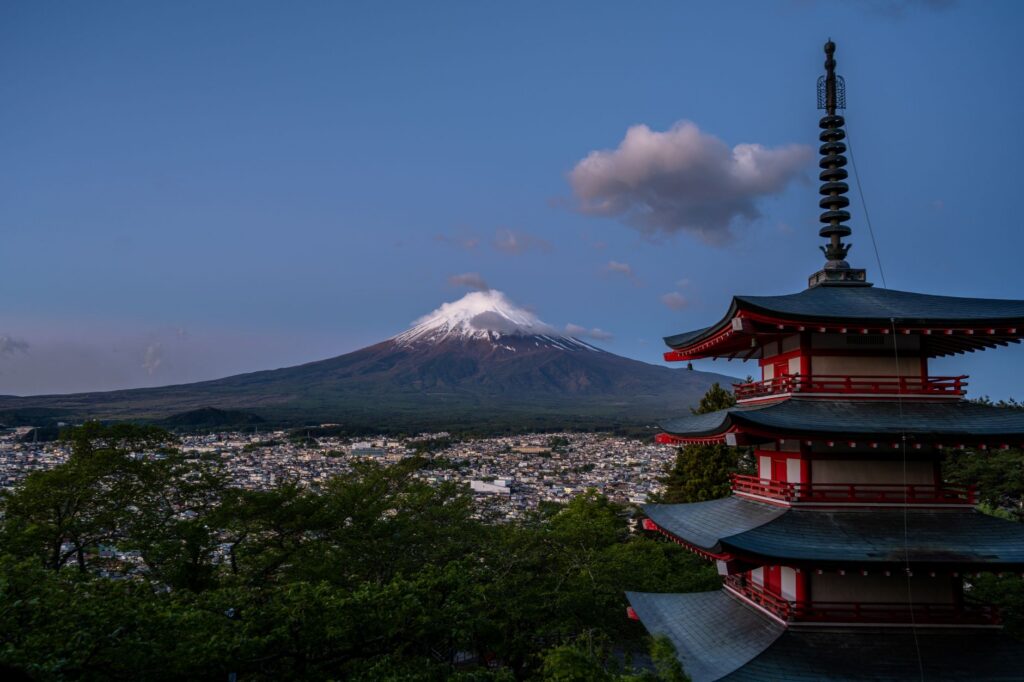
- Featured photo: Chureito Pagoda and Mount Fuji by Guohua Song on Pexels