How Many Days in Tokyo? A 4-Day Plan, Costs and Day Trips

The short answer
How many days in Tokyo you need comes down to how far you go beyond the city: four full days covers the main districts at a sensible pace, and three is the workable minimum. Add one day each for Kamakura, Hakone or Nikko. Stay in Shinjuku, Shibuya or near Tokyo Station, and travel in January, February or June for the lowest crowds.
Tokyo is not one centre but a dozen, joined by the busiest rail network in the world. Each district can fill a day on its own, so the real question is how many of them you want to see properly.
This guide sets out what each extra day buys you and a four-day route grouped by area. It also covers 2026 transit passes and ticket prices, the hotel tax change coming in 2027, the cheapest months, and the day trips worth a fifth or sixth day.
Before you book: what to sort out first
- Entry rules. US and UK passport holders can visit Japan without a visa for up to 90 days as tourists, according to Japan’s Ministry of Foreign Affairs. Other nationalities should check the visa requirements by country first. Rail passes, holiday weeks and routes that join the cities are in our guide to how many days in Japan.
- Departure tax. Japan’s International Tourist Tax rose from ¥1,000 to ¥3,000 per departure on 1 July 2026. Airlines usually add it to the fare.
- A data plan. Station transfers are far easier with live maps; check which iPhones support eSIM before you buy one.
- Travel insurance. Check what your policy pays for medical care in Japan; see whether travel insurance is worth it.
- Your closed days. Several major sights close on Mondays, and one closes on Fridays too. Plan the days around them before you book anything timed.
How many days in Tokyo do you need?
Four full days is the comfortable answer for a first visit. Three works if you keep to the east side and the west side and skip the slower stops. Each day trip then adds one more day.
| Days | What you see | Who it suits |
|---|---|---|
| 3 | Asakusa, the palace area, Shibuya and Shinjuku | Stopovers and short breaks |
| 4 | The above plus Ueno’s museums | Most first visits |
| 5 | One day trip: Kamakura, Hakone or Nikko | Travellers who want temples or hot springs |
| 6 | Two day trips, or a slower pace | Long-haul visits, peak seasons |
The fourth day is the one most often cut and most often missed. It is the day that absorbs a rainy morning, a closed museum or simple jet lag.
A 4-day Tokyo itinerary grouped by area
Each day stays on one or two neighbouring lines. Crossing the city takes 30 to 40 minutes by train, so grouping saves an hour or more a day.
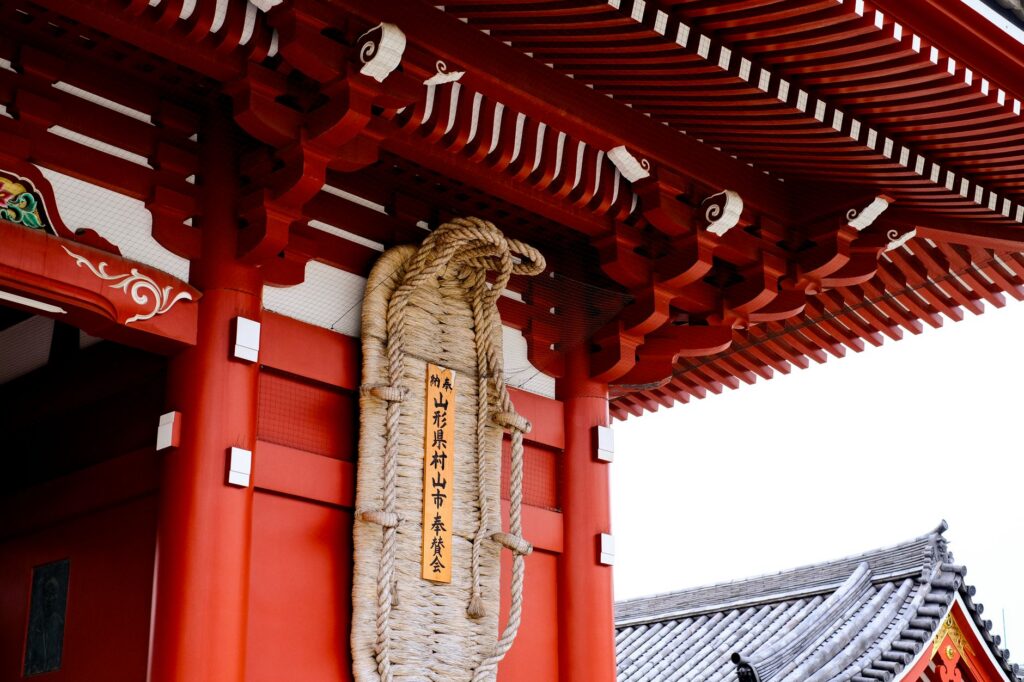
Day 1: Asakusa and Tokyo Skytree
- Reach Senso-ji early. Its main hall opens at 6:00 from April to September and 6:30 from October to March, and entry is free.
- Walk Nakamise-dori to the Kaminarimon gate before the shops fill up.
- Cross the Sumida River to Tokyo Skytree. Tembo Deck tickets start at ¥1,800 for adults.
Day 2: The Imperial Palace East Gardens and Ginza
- Start at the East Gardens, which open at 9:00 and charge no admission. They close on Mondays and Fridays.
- Walk south through Marunouchi to Tokyo Station’s restored brick building.
- Spend the afternoon and evening in Ginza.
Day 3: Meiji Jingu, Harajuku and Shibuya
- Arrive at Meiji Jingu at opening. The shrine opens at sunrise and closes at sunset, and there is no admission charge.
- Walk down Omotesando from Harajuku.
- Finish at Shibuya Crossing in the evening.
Day 4: Ueno, Shinjuku Gyoen and Shinjuku
- Visit the Tokyo National Museum in Ueno from 9:30; it closes on Mondays.
- Take the train west to Shinjuku Gyoen, which charges ¥500 for adults.
- Stay in Shinjuku for the evening around the station’s east side.
What Tokyo costs: passes and tickets in 2026
Many of Tokyo’s best-known sights cost nothing to enter. Transport is the main daily cost, and the subway passes went up on 14 March 2026.
| Ticket | Adult price, 2026 |
|---|---|
| Tokyo Subway Ticket, 24 h | ¥1,000 |
| Tokyo Subway Ticket, 48 h | ¥1,500 |
| Tokyo Subway Ticket, 72 h | ¥2,000 |
| Tokyo Skytree, Tembo Deck | from ¥1,800 |
| Tokyo National Museum | ¥1,000 |
| Shinjuku Gyoen | ¥500 |
| Senso-ji, Meiji Jingu, East Gardens | Free |
The Tokyo Subway Ticket covers the Tokyo Metro and Toei subway lines only. JR lines, including the Yamanote loop, are charged separately, so check your route before you buy the 72-hour version.
Tokyo’s hotel tax changes in April 2027
Tokyo charges a small hotel tax today, and it becomes a percentage next year. The figures below come from the Tokyo Metropolitan Government’s tax bureau.
| Room rate per person, per night | Tax until 31 Mar 2027 | Tax from 1 Apr 2027 |
|---|---|---|
| Under ¥10,000 | None | None |
| ¥10,000 to ¥12,999 | ¥100 | None |
| ¥13,000 to ¥14,999 | ¥100 | 3% |
| ¥15,000 and over | ¥200 | 3% |
From April 2027 the tax also applies to simple lodgings and private rentals, not only hotels and ryokan. A ¥30,000 room per person would then carry ¥900 a night, against ¥200 today.
Where to stay in Tokyo
Three areas suit most first visits: Shinjuku and Shibuya on the west side, and Tokyo Station on the east. Asakusa and Ueno suit a quieter, more budget-minded trip.
| Area | Best for | Trade-off |
|---|---|---|
| Shinjuku | Rail links, nightlife | Very busy station |
| Shibuya | Shopping, dining | Far from Asakusa |
| Tokyo Station, Ginza | Shinkansen, day trips | Quiet at night |
| Asakusa, Ueno | Lower prices, Narita trains | Longer rides west |
Tokyo Station is the practical base if you plan two or more day trips. Shinjuku suits a Hakone day trip, since the Odakyu Romancecar leaves from there.
When is the best time to visit Tokyo?
Spring and autumn are the most comfortable months. Japan Meteorological Agency averages for 1991 to 2020 put Tokyo’s August daily high at 31.3°C (88°F) and its January high at 9.8°C (50°F).
| Months | Average high | What to expect |
|---|---|---|
| Late Mar to early Apr | 14-19°C | Cherry blossom, busy and pricier |
| Early Jun to mid-Jul | 26-30°C | Rainy season |
| Jul to Aug | 30-31°C | Hot and humid |
| Sep to Oct | 22-28°C | The wettest months |
| Late Nov to early Dec | 12-17°C | Autumn colour, clear days |
| Jan to Feb | 10-11°C | Coldest, outside the peaks |
Cherry blossom moves each year. The agency’s sample tree in Tokyo flowers on 24 March on average; in 2026 it opened on 19 March and reached full bloom on 28 March. For maples, the Japan Weather Association expects Tokyo’s peak around 28 November 2026.
What is the cheapest time to visit Tokyo?
Mid-January to February is usually the cheapest stretch, followed by June’s rainy season. Demand is lowest then, and none of Japan’s big holiday weeks fall inside it.
- Avoid Golden Week. Japan’s public holidays on 29 April and 3 to 5 May send domestic travel and room rates up.
- Avoid the New Year week, when many shops and some gardens close; the East Gardens shut from 28 December to 3 January.
- Expect cherry blossom premiums in late March and early April.
- Accept the rain in June. The Kanto rainy season normally runs from about 7 June to 19 July.
This guide gives no hotel prices, because rates move daily with demand. Compare the same dates in two or three of these windows before you book.
Day trips from Tokyo worth an extra day
All three are under two hours by direct train, so each fits in a single day.
| Day trip | Fastest train | Leaves from |
|---|---|---|
| Kamakura | 55 min, JR Yokosuka Line | Tokyo Station |
| Hakone | About 80 min, Romancecar | Shinjuku |
| Nikko | 109 min, Spacia X | Asakusa |
Kamakura is the easiest of the three, with temples, the Great Buddha and a beach town feel. Hakone suits a hot-spring day, and Nikko rewards an early start because its shrines sit high in the mountains.
Getting in from the airports
- From Narita, the Keisei Skyliner reaches Nippori in 36 minutes at its fastest, for ¥2,470 per adult.
- From Haneda, Keikyu trains reach Shinagawa and the Tokyo Monorail reaches Hamamatsucho, each in under 20 minutes.
- Send big bags ahead if your hotel is up several flights of station stairs; a carry-on checklist helps if you travel light.
What goes wrong on a Tokyo trip
- Closed days. The Tokyo National Museum and Shinjuku Gyoen close on Mondays; the East Gardens close on Mondays and Fridays.
- Counter surcharges. Tokyo Skytree adds a ¥500 service fee per ticket bought at its 4th-floor counter or ticket machines.
- The wrong pass. The Tokyo Subway Ticket does not cover JR trains, so a Yamanote-heavy day may cost more than expected.
- Short winter hours. From November to February the East Gardens close at 16:00, with last entry at 15:30.
If your plan falls apart on the day
- Swap days if rain is forecast, putting the Tokyo National Museum on the wet day.
- Move Monday’s plan to Asakusa or Meiji Jingu, which stay open.
- Buy timed tickets online for Skytree to avoid the counter fee and the queue.
- Ask a Tokyo tourist information centre, run by the city government, for closures and routes.
Frequently asked questions
In short
Four full days in Tokyo covers its main districts without rushing, three is the minimum, and each day trip adds one more. Shinjuku and Shibuya suit evenings, and Tokyo Station suits day trips. January, February and June are the cheapest months, and spring and autumn the most comfortable.
Prices, opening hours and rules change without much notice. Everything here was checked against official sites in October 2026. If something no longer matches what you found on the ground, tell us and we will correct it.
Heading on to Kyoto? Our guide to how many days in Kyoto picks up where this one ends, and checked bags on international flights covers the allowance you will be flying with.
Sources
- Ministry of Foreign Affairs of Japan: Exemption of Visa (Short-Term Stay)
- National Tax Agency: International Tourist Tax and the Japan Tourism Agency’s rate notice
- Tokyo Metropolitan Government Bureau of Taxation: Accommodation tax for guests
- Tokyo Metro and Toei: Price change for the Tokyo Subway Ticket, 30 January 2026
- Tokyo Metro: Tokyo Subway Ticket
- Senso-ji: Visiting information
- Meiji Jingu: How to visit
- Imperial Household Agency: East Gardens of the Imperial Palace
- Tokyo National Museum: Getting here, admission and hours
- Ministry of the Environment: Shinjuku Gyoen admission
- Tokyo Skytree: Tickets and prices
- Japan Meteorological Agency: Tokyo climate normals, 1991-2020
- Japan Meteorological Agency: Cherry blossom flowering dates and full-bloom dates
- Japan Weather Association: 2026 autumn colour forecast
- Japan Meteorological Agency: Rainy season normals
- Cabinet Office: National holidays
- Keisei Electric Railway: Skyliner fares
- Tokyo Monorail: Access from Haneda Airport
- Odakyu: Limited Express Romancecar
- Tobu Railway: Spacia X boarding information
- Japan National Tourism Organization: Kamakura and Nikko itinerary