How Many Days in Osaka? A 3-Day Plan, Costs and Day Trips

The short answer
How many days in Osaka you need depends on whether you use it as a base: three full days covers the city itself, and two is the workable minimum. Add one day each for Nara, Kyoto, Himeji or Universal Studios Japan. Stay in Namba or Umeda, and travel in January, February or June for the lowest demand.
Osaka is smaller than Tokyo and easier to read. Most of what visitors come for sits in two districts, Kita around Umeda and Minami around Namba, with the castle between them.
That compactness is why many trips run longer than planned. Kyoto, Nara, Kobe and Himeji are all within about an hour by train, so Osaka often becomes the base for the whole Kansai region. This guide sets out a three-day plan, 2026 ticket prices, the city’s hotel tax, where to stay and the day trips worth an extra night.
Before you book: what to sort out first
- Entry rules. US and UK passport holders can visit Japan without a visa for up to 90 days as tourists, according to Japan’s Ministry of Foreign Affairs. Other nationalities should check the visa requirements by country first. Rail passes, holiday weeks and routes that join the cities are in our guide to how many days in Japan.
- Departure tax. Japan’s International Tourist Tax rose from ¥1,000 to ¥3,000 per departure on 1 July 2026. Airlines usually add it to the fare.
- A data plan. Umeda Station is a maze, and live maps help; check which iPhones support eSIM before you buy one.
- Travel insurance. Check what your policy pays for medical care in Japan; see whether travel insurance is worth it.
- Your arrival airport. Most international flights land at Kansai International (KIX), about 30 to 35 minutes from the city by express train.
How many days in Osaka do you need?
Three full days is the comfortable answer for a first visit. Two works if you only want the castle, Umeda and Dotonbori. Every day trip, and a day at Universal Studios Japan, then adds one more.
| Days | What you see | Who it suits |
|---|---|---|
| 2 | Osaka Castle, Umeda, Dotonbori | Stopovers, a Tokyo-Kyoto route |
| 3 | The above plus Shinsekai and Tennoji | Most first visits |
| 4 | One day out: Nara, Kyoto or the theme park | Families, first trips to Kansai |
| 5-6 | Two or three day trips | Travellers using Osaka as a base |
The third day matters more than it looks. It is the one that absorbs jet lag, a rainy morning or a long queue at the castle.
A 3-day Osaka itinerary grouped by area
Each day keeps to one part of the city, so you spend the time on foot rather than changing lines.
Day 1: Osaka Castle and Umeda
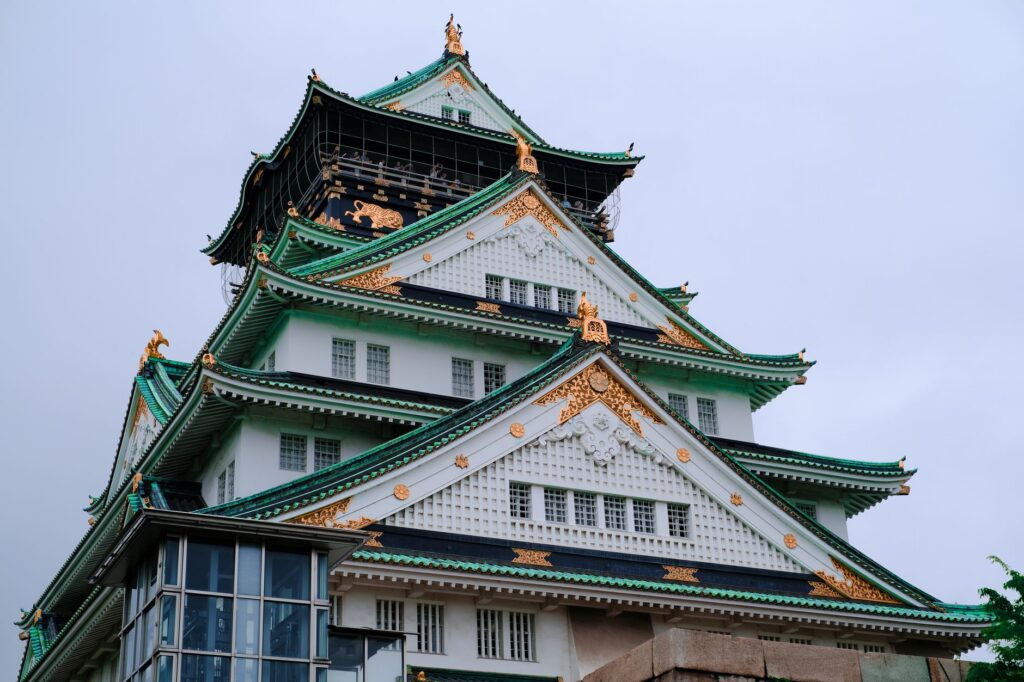
- Reach Osaka Castle’s main tower at 9:00. It closes at 18:00, with last entry at 17:30.
- Walk the castle park, which is free to enter, then take the metro north to Umeda.
- Finish at the Umeda Sky Building, whose rooftop observatory stays open until 22:30.
Day 2: Minami, from Kuromon Market to Dotonbori
- Start late morning at Kuromon Market for street food.
- Walk north through the Shinsaibashi shopping arcade.
- Spend the evening on Dotonbori, along the canal, when the signs are lit.
Day 3: Sumiyoshi Taisha, Shitenno-ji and Shinsekai
- Begin at Sumiyoshi Taisha, one of Japan’s oldest shrines, in the south of the city.
- Visit Shitenno-ji, founded by Prince Shotoku in 593 as Japan’s first state-sponsored Buddhist temple.
- End in Shinsekai under Tsutenkaku tower, or at the Abeno Harukas observatory for the sunset.
What Osaka costs: passes and tickets in 2026
Many of Osaka’s best streets cost nothing, and the paid sights are modest. Osaka Castle’s main tower went from ¥600 to ¥1,200 for adults on 1 April 2025, the day the Toyotomi Stone Wall Museum opened; junior high school age and under still enter free.
| Ticket | Adult price, 2026 |
|---|---|
| Enjoy Eco Card, 1 day | ¥820 weekdays, ¥620 weekends |
| Osaka Amazing Pass, 1 day | ¥3,500 |
| Osaka Amazing Pass, 2 days | ¥5,000 |
| Osaka Castle main tower | ¥1,200 |
| Umeda Sky Building | ¥2,000 |
| Abeno Harukas 300, same day | ¥2,200 |
The Enjoy Eco Card covers Osaka Metro and city buses for one day. The Amazing Pass adds entry to about 40 attractions, and its day runs from 3:00 to 2:59, not for 24 hours from first use.
Osaka’s hotel tax since September 2025
Osaka Prefecture charges a tax per person per night, and it rose on 1 September 2025. The bands now start at a lower room rate.
| Room rate per person, per night | Tax |
|---|---|
| Under ¥5,000 | None |
| ¥5,000 to ¥14,999 | ¥200 |
| ¥15,000 to ¥19,999 | ¥400 |
| ¥20,000 and over | ¥500 |
The rate counts cleaning fees and service charges but not meals. Before September 2025 the top band was ¥300, and rooms under ¥7,000 paid nothing.
Where to stay in Osaka
Two areas suit most visits: Namba in the south and Umeda in the north. Shin-Osaka and Tennoji suit specific plans.
| Area | Best for | Trade-off |
|---|---|---|
| Namba, Shinsaibashi | Food, Dotonbori, Nara trains | Loud late at night |
| Umeda | JR lines to Kyoto and Kobe | Huge, confusing stations |
| Shin-Osaka | Shinkansen to Himeji, Tokyo | Little to do nearby |
| Tennoji | HARUKA to the airport | Further from Umeda |
Namba is the practical choice if you plan a Nara day, since Kintetsu trains leave from Osaka-Namba. Umeda suits a Kyoto or Kobe day trip on JR.
Is it worth visiting Osaka?
Yes, for most travellers to Japan, and for two reasons. Its food streets and evenings are the liveliest in the region, and its rail links put Kyoto, Nara and Kobe within about 35 minutes.
It is a lighter city for sightseeing than Kyoto. If temples are the point of your trip, spend more nights in Kyoto and treat Osaka as the place to eat and the base for day trips. Our guide to how many days in Kyoto covers that side.
When is the best time to visit Osaka?
Spring and autumn are the most comfortable months. Japan Meteorological Agency averages for 1991 to 2020 put Osaka’s August daily high at 33.7°C (93°F), hotter than Tokyo, and its January high at 9.7°C (49°F).
| Months | Average high | What to expect |
|---|---|---|
| Late Mar to early Apr | 14-20°C | Cherry blossom, busy |
| Jun to mid-Jul | 28-32°C | Rainy season, wettest month |
| Jul to Aug | 32-34°C | Hot and humid |
| Oct to Nov | 18-24°C | Mild, autumn colour |
| Jan to Feb | 10-11°C | Coldest, lowest demand |
The agency’s sample cherry tree in Osaka flowers on 27 March on average and reaches full bloom on 4 April. In 2026 it opened on 26 March and peaked on 3 April.
What is the cheapest time to visit Osaka?
Mid-January to February is usually the cheapest stretch, followed by June. Demand is lowest then, and none of Japan’s big holiday weeks fall inside either window.
- Avoid Golden Week. Japan’s public holidays on 29 April and 3 to 5 May push up domestic travel and room rates.
- Avoid the New Year week, when Osaka Castle’s main tower closes from 28 December to 1 January.
- Expect cherry blossom premiums in late March and early April.
- Accept the rain in June. The Kinki rainy season normally runs from about 6 June to 19 July; in 2026 it ran from 2 June to 9 July.
This guide gives no hotel prices, because rates move daily with demand. Compare the same dates in two of these windows before you book.
Day trips from Osaka worth an extra day
Four cities sit within about an hour, and each fills a day.
| Day trip | Train time | Leaves from |
|---|---|---|
| Kobe | About 25 min, JR | Osaka Station |
| Kyoto | About 30 min, JR Special Rapid | Osaka Station |
| Himeji | 30 min shinkansen, 60 min JR | Shin-Osaka or Osaka |
| Nara | About 34 min, Kintetsu | Osaka-Namba |
Nara is the easiest single day, for Todai-ji and its deer park. Himeji Castle charges non-residents ¥2,500 from March 2026, and Koyasan’s temple town is a longer trip: about 80 to 90 minutes by Nankai train from Namba, then a five-minute cable car.
Getting in from Kansai Airport
- To Namba, Nankai’s rapi:t takes 34 minutes at its fastest. Its limited express charge is ¥700 on top of the regular fare.
- To Tennoji or Shin-Osaka, JR’s HARUKA one-way ticket for visitors costs ¥1,300 to Tennoji and ¥1,800 to Osaka or Shin-Osaka.
- Pack for stairs, since Osaka’s older stations are long walks; a carry-on checklist helps if you travel light.
What goes wrong on an Osaka trip
- The castle queue. Last entry is 17:30, and staff may close the ticket line earlier on busy days.
- Surcharges on board. Buying the rapi:t express ticket on the train adds ¥300.
- The wrong pass. The Enjoy Eco Card covers Osaka Metro and city buses, not JR or private lines to Nara or Kyoto.
- Late activation. Starting the Amazing Pass between midnight and 2:59 spends that day’s pass, which expires at 3:00.
If your plan falls apart on the day
- Swap days if rain is forecast, putting the covered Kuromon Market and Shinsaibashi arcade on the wet day.
- Move the castle to the morning if a holiday crowd is building.
- Buy timed tickets online for the observatories to skip the counter queue.
- Ask Tourist Information OSAKA at JR Osaka Station, or its Namba centre, for closures and routes.
Frequently asked questions
In short
Three full days in Osaka covers the castle, Umeda, Minami and the south, two is the minimum, and each day trip adds one more. Namba suits food and Nara, Umeda suits JR trips to Kyoto and Kobe. January, February and June are the cheapest months, and spring and autumn the most comfortable.
Prices, opening hours and rules change without much notice. Everything here was checked against official sites in October 2026. If something no longer matches what you found on the ground, tell us and we will correct it.
Flying on from Kansai? Our guide to how many days in Tokyo covers the other end of the shinkansen, and checked bags on international flights covers the allowance you will be flying with.
Sources
- Ministry of Foreign Affairs of Japan: Exemption of Visa (Short-Term Stay)
- National Tax Agency: International Tourist Tax
- Osaka Prefectural Government: Accommodation tax (in Japanese)
- Osaka Castle Main Tower: Visitor guide, hours and admission (in Japanese)
- Osaka Metro: Osaka 1-Day Pass, Enjoy Eco Card
- Osaka Amazing Pass: Prices and sales period
- Umeda Sky Building: Kuchu Teien Observatory
- Abeno Harukas 300: Tickets
- Osaka Convention and Tourism Bureau: Osaka sightseeing transportation guide, Shitennoji and Tourist information centres
- Japan Meteorological Agency: Osaka climate normals, 1991-2020
- Japan Meteorological Agency: Cherry blossom flowering dates and full-bloom dates
- Japan Meteorological Agency: Kinki rainy season dates
- Cabinet Office: National holidays
- Nankai Electric Railway: Limited Express rapi:t
- JR West: HARUKA one-way ticket
- Visit Nara: Travel to Nara
- Kyoto City Tourism Association: Getting to Kyoto
- Japan National Tourism Organization: Kobe in one day
- Visit Himeji: Getting here and Himeji Castle admission fees
- Japan National Tourism Organization: Koyasan